

Robots & Pencils Brings Its Applied AI Engineering Expertise to AWS re:Invent 2025 

As AI reshapes every industry, Robots & Pencils leads with applied intelligence that drives measurable business advantages. 

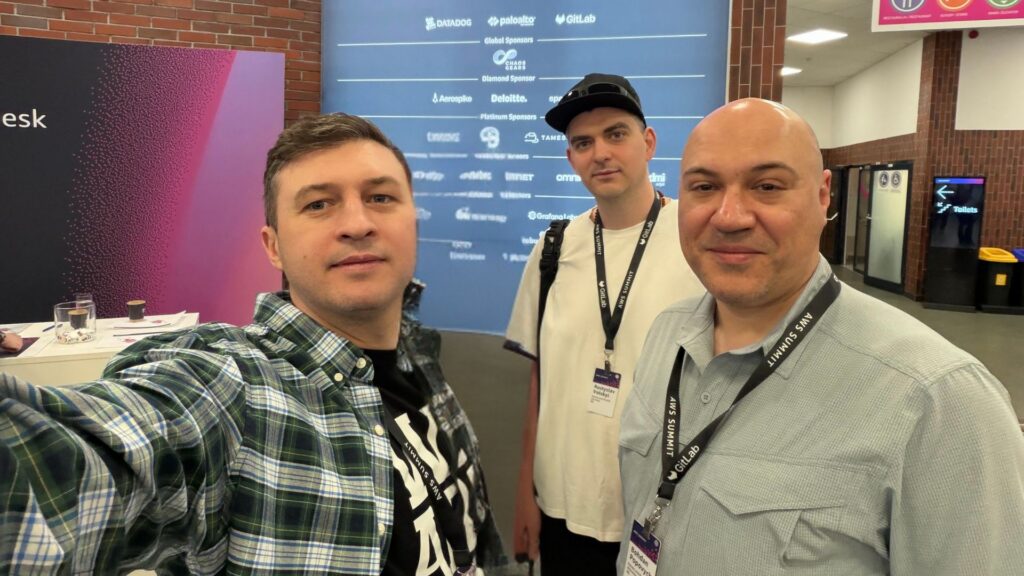
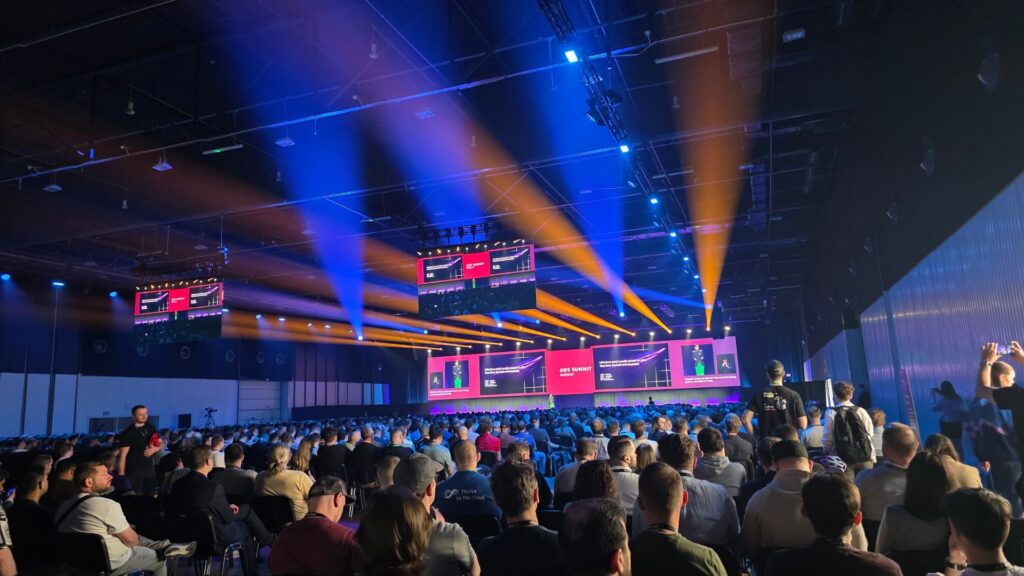
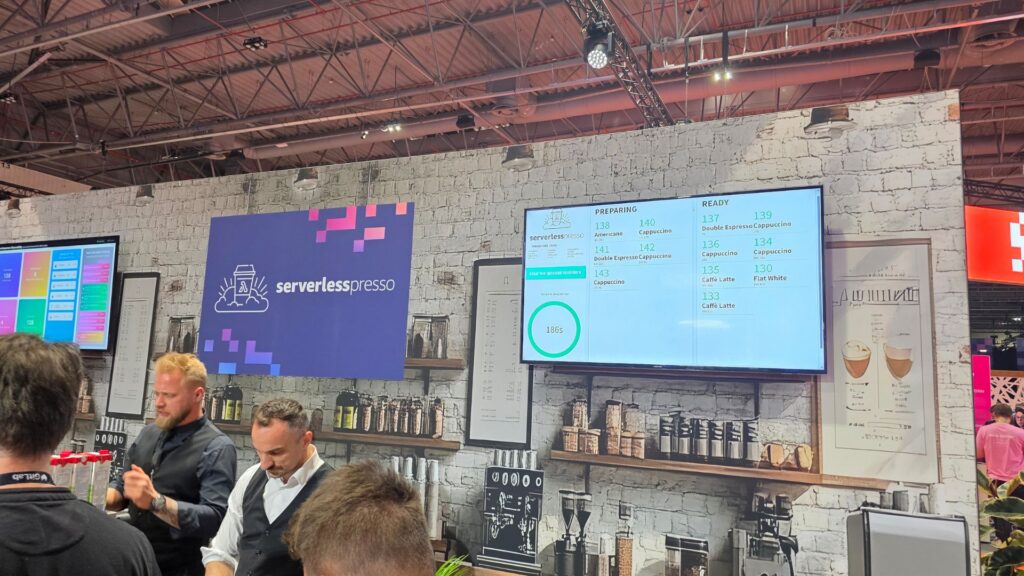
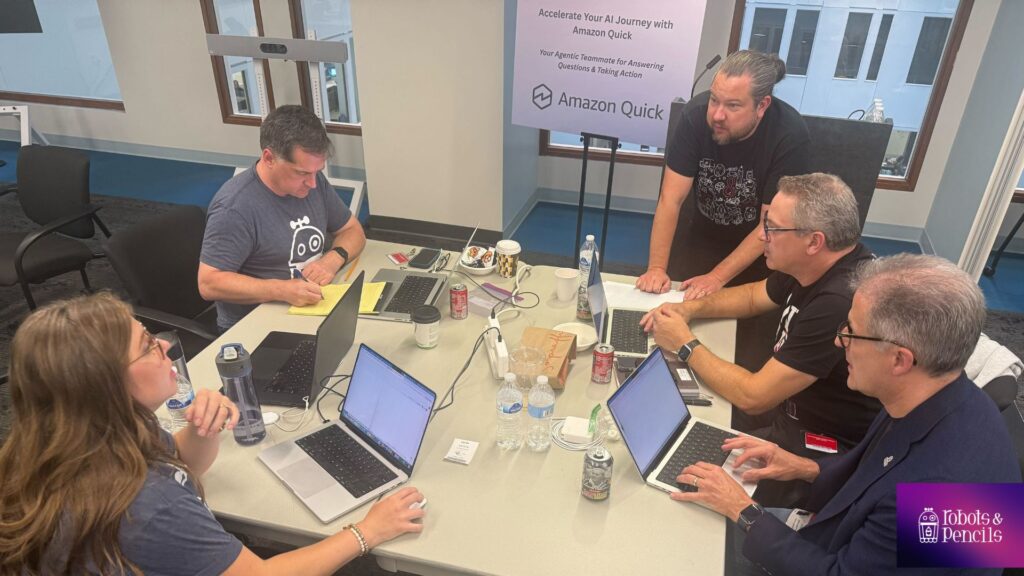
Robots & Pencils, an applied AI engineering partner, will attend AWS re:Invent 2025, taking place December 1–5 in Las Vegas, joining global builders and business leaders shaping the future of cloud, data, and AI. 

Schedule time to connect with the Robots & Pencils team at AWS re:Invent. 

Robots & Pencils enables ambitious teams to move faster, build smarter, and deliver measurable results. With proven systems and elite engineering talent, the company modernizes, activates AI, and scales intelligent products across leading cloud platforms. 

“Leaders of organizations are seeking methods to speed up time-to-market and modernize work,” said Jeff Kirk, Executive Vice President of Applied AI at Robots & Pencils. “AI is a strategic advantage that increases the velocity of how organizations deliver on customer needs. That’s where we live, turning data, and design into intelligence that moves the business forward.” 

Where traditional systems integrators scale with headcount, Robots & Pencils scales with small, nimble teams and compounding systems that learn, adapt, and accelerate impact. Through a continuous cycle of piloting, scaling, calibration, and operationalization, the company helps clients move from idea to implementation with speed and confidence. By combining automation with human-in-the-loop intelligence, Robots & Pencils compresses months of research, design, and development into weeks, driving faster outcomes and sharper market alignment. 

Across industries such as Financial Services, Education, Healthcare, Energy, Transportation, Industrial Manufacturing, and CPG/Retail, Robots & Pencils helps organizations modernize systems, activate intelligent automation, and deliver products that evolve with the business. 

The team will be in Las Vegas throughout the week. Schedule a meeting with Robots & Pencils at AWS re:Invent

The pace of AI change can feel relentless with tools, processes, and practices evolving almost weekly. We help organizations navigate this landscape with clarity, balancing experimentation with governance, and turning AI’s potential into practical, measurable outcomes. If you’re looking to explore how AI can work inside your organization—not just in theory, but in practice—we’d love to be a partner in that journey. Request an AI briefing

Robots & Pencils to Sponsor and Exhibit at Agentic AI and the Student Experience Conference 

AI-first consultancy joins higher ed leaders to explore how agentic AI is reshaping the student journey 

Robots & Pencils, an AI-first, global digital innovation firm specializing in cloud-native web, mobile, and app modernization, today announced its sponsorship and participation in Agentic AI and the Student Experience, hosted by Arizona State University (ASU). As a Silver Sponsor, exhibitor, and active participant, Robots & Pencils will engage with education leaders from around the world October 22–24, 2025, at the Omni Tempe Hotel at ASU. 

See how Robots & Pencils blends AI, cloud, and design to shape the future of education. 

The three-day event convenes higher education professionals and technology innovators to explore how agentic AI, systems that not only respond but proactively decide and solve problems, is revolutionizing the student experience. 

“Higher education is at a turning point, and agentic AI represents a breakthrough opportunity to enhance every stage of the student journey, from admissions to graduation and beyond,” said Leonard Pagon, CEO of Robots & Pencils. “We’re proud to join ASU, AWS, and other higher-education leaders to showcase what’s possible when cloud-native design, intelligent systems, and human-centered experiences come together. This is about accelerating AI readiness and charting the future of the student experience.” 

Robots & Pencils brings deep expertise to the higher education sector, having partnered with ASU on a multi-year transformation to unify academic data, streamline credential management, and expand student engagement through secure, scalable platforms. As an AWS Partner, the firm builds AI-ready, cloud-native systems that deliver speed, security, and scale across higher- ed institutions. 

“Education stands at the edge of a new frontier with agentic AI, where AI systems are proactive, adaptive and deeply personalized to enhance the student experience,” said Lev Gonick, Chief Information Officer at ASU and executive sponsor for the event. “What began as a call to convene has grown into a global gathering of more than 500 education and industry leaders who will chart the next chapter of AI in education,” Gonick continued.   

Robots & Pencils will host conversations at its exhibit table in the conference lobby, where attendees can explore use cases, see demonstrations, and connect with experts on campus modernization and AI readiness. Higher education leaders attending the event are encouraged to reach out in advance to request one-on-one meetings at robotsandpencils.com/asu2025

The pace of AI change can feel relentless with tools, processes, and practices evolving almost weekly. We help organizations navigate this landscape with clarity, balancing experimentation with governance, and turning AI’s potential into practical, measurable outcomes. If you’re looking to explore how AI can work inside your organization—not just in theory, but in practice—we’d love to be a partner in that journey. Request an AI briefing 

Jeff Kirk Named Executive Vice President of Applied AI at Robots & Pencils 

From Alexa to Emma, Kirk brings two decades of AI breakthroughs that have reshaped industries. Now he’s powering Robots & Pencils’ rise in the intelligence age. 

Robots & Pencils, an AI-first, global digital innovation firm specializing in cloud-native web, mobile, and app modernization, today announced the executive appointment of Jeff Kirk as Executive Vice President of Applied AI. A seasoned technology leader with a career spanning global agencies, startups, and Fortune 100 enterprises, Kirk steps into this newly created role to accelerate the firm’s AI-first vision and unlock transformative outcomes for clients. As EVP of Applied AI, Kirk will lead the firm’s strategy and delivery of AI-powered and enterprise AI solutions across industries. 

Explore how Robots & Pencils blends science and design to build market leaders. 

Kirk’s track record speaks for itself, with AI breakthroughs that fueled customer engagement and business growth. He founded and scaled Moonshot, an intelligent digital products company later acquired by Pactera, where he spearheaded next-generation experiences in voice, augmented reality, and enterprise digitalization. At Amazon, he served as International Product & Technology Lead for Alexa, driving AI-powered personal assistant expansion to millions of households and users worldwide. Most recently, at bswift, Kirk led AI & Data as VP, delivering conversational AI breakthroughs with the award-winning Emma assistant and GenAI-powered EnrollPro decision support system. 

Across each of these roles runs a common thread. Kirk builds and scales innovations that transform how industries work, creating technologies that move from experimental to essential at breathtaking speed. 

“Jeff has been at the frontier of every major shift in digital innovation,” said Len Pagon, CEO of Robots & Pencils. “From shaping the future of eCommerce and mobile platforms at Brulant and Rosetta, to pioneering global voice AI at Amazon, to launching AI-driven customer experiences at bswift, Jeff has consistently delivered what’s next. He doesn’t just talk about AI. He builds products that millions use every day. With Jeff at the helm of Applied AI, Robots & Pencils is sharpening its challenger edge, helping clients leap ahead while legacy consultancies struggle to catch up. I’m energized by what this means for our clients and inspired by what it means for our people.” 

Across two decades, Kirk has built a reputation for translating complex business requirements into enterprise-grade AI and technology solutions that scale, stick, and generate measurable results. His entrepreneurial mindset and hands-on leadership style uniquely position him to help clients experiment, activate, and operate AI across their businesses. 

“Organizations and their workers are under pressure to innovate on behalf of customers while simultaneously learning to work with a new type of co-worker: artificial intelligence,” said Kirk. “The steps we take together to learn to work differently will lead to the most outsized innovation in our industries. I’m thrilled to join Robots & Pencils to push the boundaries of what’s possible with AI, to deliver outcomes that matter for our clients and their customers, and to create opportunities for our teams to do the most meaningful work of their careers.” 

Kirk began his career at Brulant and Rosetta, where he worked alongside Pagon and other Robots & Pencils’ executive team members, leading engineering and solutions architecture across content, commerce, mobile, and social platforms. His return to the fold marks both a reunion and a reinvention, positioning Robots & Pencils as a leader in applied AI at scale. 

The pace of AI change can feel relentless with tools, processes, and practices evolving almost weekly. We help organizations navigate this landscape with clarity, balancing experimentation with governance, and turning AI’s potential into practical, measurable outcomes. If you’re looking to explore how AI can work inside your organization—not just in theory, but in practice—we’d love to be a partner in that journey. Request an AI briefing.  

How Agentic AI Is Rewiring Higher Education 

A University Without a Nervous System 

Walk through the back offices of most universities, and you will see the challenge. Admissions runs on one platform, advising on another, learning management on a third, and academic affairs on a fourth. Each system functions, yet little connects them. Students feel the gaps when financial aid processing is delayed, academic records are incomplete, and support processes remain confusing and slow. Leaders feel it in the cost of complexity and the weight of compliance. 

Higher education institutions typically manage dozens of disconnected systems, with IT leaders facing persistent integration challenges that consume substantial staff time and budget resources while creating operational bottlenecks that affect both student services and institutional agility. 

For decades, CIOs and CTOs have been tasked with stitching these systems together. Progress came in patches, with integrations here and dashboards there. What emerged looked more like scar tissue than connective tissue. Patchwork technology blocks digital transformation in higher education, and leaders now seek infrastructure that can unify rather than just connect. 

The Rise of Agentic AI as Connective Tissue 

Agentic AI wires the university together. Acting like a nervous system, it routes information and triggers actions throughout the institution, coordinating workflows through intelligent routing and contextual decision-making. Unlike traditional automation that follows rigid rules, agentic AI systems can make contextual decisions, learn from outcomes, and coordinate across multiple platforms without constant human oversight. 

In practice, this means a transfer request automatically verifies transcripts through the National Student Clearinghouse, cross-references degree requirements in the SIS, flags discrepancies for staff to review, and updates student records, typically reducing processing time from 5-7 days to under 24 hours while maintaining accuracy. It means an advising system can recognize a retention risk, trigger outreach, and log the interaction without human staff piecing the puzzle together by hand. 

Agentic AI needs a strong foundation. That foundation is cloud-native infrastructure for universities that’s built to scale during peak demand, enforce compliance, and keep every action visible. With this base in place, universities move from pilot projects to production systems. The result is infrastructure that holds under pressure and adapts when conditions change. 

The Brain Still Decides 

A nervous system does not think on its own. It carries signals to the brain, where decisions are made. In the university context the brain is still human, made up of faculty, advisors, administrators, and executives. 

This is where the design philosophy matters. Agentic AI should amplify human capacity, not replace it. Advisors can spend more time in meaningful conversations with students because degree audits and schedule planning run on their own. CIOs can focus on strategic alignment because monitoring and audit logs are captured automatically. The architecture creates space for judgment, and it also creates space for human connection that strengthens the student experience. 

However, this transition requires careful change management. Faculty often express concerns about AI decision-making transparency, while staff worry about job displacement. Successful implementations address these concerns through clear governance frameworks, explainable AI requirements, and retraining programs that position staff as AI supervisors rather than replacements. 

What Happens When Signals Flow Freely 

When agentic systems begin to carry the load, universities see a different rhythm. Transcript processing moves with speed. Advising interactions trigger at the right time. Students find support without friction. Leaders gain resilience as workflows carry themselves from start to finish. What emerges is more than efficiency. It is an institution that thinks and acts as one, with every part working in concert to support the student journey. 

Designing for Resilience and Trust 

CIOs and CTOs recognize that orchestration brings new responsibility. Data must be structured and governed, with student information requiring FERPA compliant handling throughout all automated processes. Agents must be observable and auditable. Compliance cannot live as a separate checklist but as a property of the system itself. AWS-native controls, from encryption to identity management, provide the levers to design with security as a default rather than a bolt-on. 

At the same time, leaders must design for operational trust. A nervous system functions only when signals are reliable. This requires real-time monitoring dashboards, clear escalation protocols when agents encounter exceptions, and audit trails that document every automated decision. 

The Next Chapter of Higher Education Infrastructure 

What is happening now is less about another wave of apps and more about a shift in the foundation of the institution. Agentic AI is beginning to operate as infrastructure. It connects the university’s digital systems into something coordinated and adaptive. 

The role of leadership is to decide how that nervous system will function, and what kind of human judgment it will amplify. Presidents, provosts, CIOs, and CTOs who recognize this shift will shape not only the student experience but the operational resilience of their institutions for years to come. 

For leaders evaluating agentic AI initiatives, three factors determine readiness.  

Institutions strong in all three areas see faster implementation and higher adoption rates. 

The institutions that succeed will be those that view agentic AI not as a technology project, but as an organizational transformation requiring new governance models, staff capabilities, and student engagement strategies. 

When the nervous system works, the signals move freely, and people do their best work. Students find support when they need it. Advisors focus on real conversations. Leaders see further ahead. That is the promise of agentic AI in higher education, not machines in charge, but machines carrying the load so people can do what only people can do. 

Join Us

Join us at ASU’s Agentic AI and the Student Experience conference. Contact us to book time with our leaders and explore how agentic AI can strengthen your institution. 

Request an AI Briefing.  

The pace of AI change can feel relentless with tools, processes, and practices evolving almost weekly. We help organizations navigate this landscape with clarity, balancing experimentation with governance, and turning AI’s potential into practical, measurable outcomes. If you’re looking to explore how AI can work inside your organization—not just in theory, but in practice—we’d love to be a partner in that journey. Learn more about Robots & Pencils AI Solutions for Education. 

Beyond Wrappers: What Protocols Leave Unsolved in AI Systems 

I recently built a Model Context Protocol (MCP) integration for my Oura Ring. Not because I needed MCP, but because I wanted to test the hype: Could an AI agent make sense of my sleep and recovery data? 

It worked. But halfway through I realized something. I could have just used the Oura REST API directly with a simple wrapper. What I ended up building was basically the same thing, just with extra ceremony. 

As someone who has architected enterprise AI systems, I understand the appeal. Reliability isn’t optional, and protocols like MCP promise standardization. To be clear, MCP wasn’t designed to fix hallucinations or context drift. It’s a coordination protocol. But the experiment left me wondering: Are we solving the real problems or just adding layers? 

The Wrapper Pattern That Won’t Go Away 

MCP joins a long list of frameworks like LangChain, LangGraph, SmolAgents, and LlamaIndex, each offering a slightly different spin on coordination. But at heart, they’re all wrappers around the same issue, getting LLMs to use tools consistently. 

Take CrewAI. On paper, it looked elegant with agents organized into “crews,” each with roles and tools. The demos showed frictionless orchestration. In practice? The agents ignored instructions, produced invalid JSON even after careful prompting, and burned days in debugging loops. When I dropped down to a lower-level tool like LangGraph, the problems vanished. CrewAI’s middleware hadn’t added resilience, it had hidden the bugs. 

This isn’t an isolated frustration. Billions of dollars are flowing into frameworks while fundamentals like building reliable agentic systems remain unsettled. MCP risks following the same path. Standardizing communication may sound mature, but without solving hallucinations and context loss, it’s just more scaffolding on shaky foundations. 

What We’re Not Solving 

The industry has been busy launching integration frameworks, yet the harder challenges remain stubbornly in place: 

As CData notes, these aren’t just implementation gaps. They’re fundamental challenges. 

What the Experiments Actually Reveal 

Working with MCP brought a sharper lesson. The difficulty isn’t about APIs or data formats. It’s about reliability and security. 

When I connected my Oura data, I was effectively giving an AI agent access to intimate health information. MCP’s “standardization” amounted to JSON-RPC endpoints. That doesn’t address the deeper issue: How do you enforce “don’t share my health data” in a system that reasons probabilistically? 

To be fair, there’s progress. Auth0 has rolled out authentication updates, and Anthropic has improved Claude’s function-calling reliability. But these are incremental fixes. They don’t resolve the architectural gap that protocols alone can’t bridge. 

The Evidence Is Piling Up 

The risks aren’t theoretical anymore. Security researchers keep uncovering cracks

Meanwhile, fragmentation accelerates. Merge.dev lists half a dozen MCP alternatives. Zilliz documents the “Great AI Agent Protocol Race.” Every new protocol claims to patch what the last one missed. 

Why This Goes Deeper Than Protocol Wars 

The adoption curve is steep. Academic analysis shows MCP servers grew from around 1,000 early this year to over 14,000 by mid-2025. With $50B+ in AI funding at stake, we’re not just tinkering with middleware; we’re building infrastructure on unsettled ground. 

Protocols like MCP can be valuable scaffolding. Enterprises with many tools and models do need coordination layers. But the real breakthroughs come from facing harder questions head-on: 

These problems exist no matter the protocol. And until they’re addressed, standardization risks becoming a distraction. 

The question isn’t whether MCP is useful; it’s whether the focus on protocol standardization is proportional to the underlying challenges. 

So Where Does That Leave Us? 

There’s nothing wrong with building integration frameworks. They smooth edges and create shared patterns. But we should be honest about what they don’t solve. 

For many use cases, native function calling or simple REST wrappers get the job done with less overhead. MCP helps in larger enterprise contexts. Yet the core challenges, reliability and security, remain active research problems. 

That’s where the true opportunity lies. Not in racing to the next protocol, but in tackling the questions that sit at the heart of agentic systems. 

Protocols are scaffolding. They’re not the main event. 

Learn more about Agentic AI. 

The pace of AI change can feel relentless with tools, processes, and practices evolving almost weekly. We help organizations navigate this landscape with clarity, balancing experimentation with governance, and turning AI’s potential into practical, measurable outcomes. If you’re looking to explore how AI can work inside your organization—not just in theory, but in practice—we’d love to be a partner in that journey. Request a strategy session.  

Beyond Story Points: Rethinking Software Engineering Productivity in the Age of AI 

Why traditional metrics fall short, and how modern frameworks like DORA and SPACE can guide better outcomes 

For years, engineering leaders have relied on familiar metrics to gauge developer performance: story points, bug counts, and lines of code. These measures offered a shared baseline, especially in Agile environments where estimation and output needed a common language. 

But in today’s AI-assisted world, those numbers no longer tell the full story. Performance isn’t just about volume or velocity. It’s about outcomes. Did the developer deliver the expected functionality, with the right quality, on time? That’s how we compensate today, and that’s still what matters. But how we measure those things must evolve.  

With tools like GitHub Copilot, Claude Code, and Cursor generating entire functions, tests, and documentation quickly, output is becoming less about what a developer types and more about what they model, validate, and evolve. 

The challenge for CIOs, CTOs, and SVPs of Engineering isn’t just adopting new tools. It’s rethinking how to measure effectiveness in a world where productivity is amplified by AI and complexity often hides behind automation. 

Why Traditional Metrics Break Down 

The future of measurement hinges on three categories: productivity, quality, and functionality. These have always been essential to evaluating engineering work. But in the AI era, we must measure them differently. That shift doesn’t mean abandoning objectivity; it means updating our tools. 

The problem isn’t that legacy metrics are useless. It’s that they’re easily gamed, misinterpreted, or disconnected from business value. 

At best, these metrics create noise. At worst, they drive harmful incentives, like rewarding speed over safety, or activity over alignment. 

Today’s AI-assisted workflows lack mature solutions for tracking whether functionality requirements, like EPICs and user stories, have been fully met. But new approaches, like multi-domain linking (MDL), are emerging to close that gap. Measurement is getting smarter, and more connected, because it has to. 

The Rise of Directional Metrics 

Modern frameworks like DORA and SPACE were built to address these gaps. 

DORA (DevOps Research and Assessment) focuses on: 

These measure delivery health, not just effort. They’re useful for understanding how efficiently and safely value reaches users. 

SPACE (developed by Microsoft Research) considers: 

SPACE offers a more holistic view, especially in cross-functional and AI-assisted teams. It acknowledges that psychological safety, cross-team communication, and real flow states often impact long-term output more than individual commits. 

AI Complicates the Picture 

AI tools don’t eliminate the need for metrics; they demand smarter ones. When an LLM can write 80% of the code for a feature, how do we credit the developer? By the number of keystrokes? Or by their judgment in prompting, curating, and validating what the tool produced? 

But here’s the deeper challenge: What if that feature doesn’t do what it was supposed to? 

In AI-assisted workflows: 

Productivity isn’t just about output; it’s about fitness to purpose. Without strong traceability between code, tests, user stories, and epics, it’s easy for teams to ship fast but fall short of the business goal. 

Many organizations today struggle to answer a basic question: Did this delivery actually fulfill the intended functionality? 

This is where multi-domain linking (MDL) and AI-powered traceability show promise. By connecting user stories, requirements, test cases, design artifacts, and even user feedback within a unified graph, teams can use LLMs to assess whether the output truly matches the input. 

And this capability unlocks more than just better alignment, it opens the door to innovation. AI-assisted development enables organizations to build more complex, interconnected, and adaptive systems than ever before. As those capabilities expand, so too must our ability to measure their economic value. What applications can we now build that we couldn’t before? And what is that worth to the business? 

That’s not a theoretical exercise. It’s the next frontier in engineering measurement. 

Productivity as a System, Not a Score 

The best engineering organizations treat productivity like instrumentation. No single number can tell you what’s working, but the right mix of signals can guide better decisions. That system must account for both delivery efficiency and functional alignment. High velocity is meaningless if the outcome doesn’t meet the requirements it was designed to fulfill. 

That means: 

Most importantly, it means aligning measurement to what matters: Did the product deliver value? Did it meet its intended function? Was the effort worth the outcome? Those are the questions that still define success and the ones our measurement frameworks must help answer. 

How to Start Rethinking Measurement 

If your metrics haven’t evolved alongside your tooling, here’s how to get started: 

AI is reshaping how software gets built. That doesn’t mean productivity can’t be measured. It means it must be measured differently. The leaders who shift from tracking motion to monitoring momentum will build faster, healthier, and more resilient engineering teams. 

Robots & Pencils: Measuring What Matters in an AI-Driven World 

At Robots & Pencils, we believe productivity isn’t a score; it’s a system. A system that must measure not just speed, but alignment. Did the output meet the requirements? Did it fulfill the epic? Was the intended functionality delivered? 

We help clients extend traditional measurement approaches to fit an AI-first world. That means combining DORA and SPACE metrics with functional traceability, such as linking code to requirements, outcomes to epics, and user stories to business results. 

Our secure, AWS-native platforms are already instrumented for this kind of visibility. And our teams are actively designing multi-domain models that give leaders better answers to the questions they care about most. 

As AI opens the door to applications we never thought were possible, our job is to help you measure what matters, including what’s newly possible. We don’t just help teams move faster. We help them build with confidence and prove it. 

Pilot, Protect, Produce: A CIO’s Guide to Adopting AI Code Tools 

How to responsibly explore tools like GitHub Copilot, Claude Code, and Cursor—without compromising privacy, security, or developer trust 

AI-assisted development isn’t a future state. It’s already here. Tools like GitHub Copilot, Claude Code, and Cursor are transforming how software gets built, accelerating boilerplate, surfacing better patterns, and enabling developers to focus on architecture and logic over syntax and scaffolding. 

The productivity upside is real. But so are the risks. 

For CIOs, CTOs, and senior engineering leaders, the challenge isn’t whether to adopt these tools—it’s how. Because without the right strategy, what starts as a quick productivity gain can turn into a long-term governance problem. 

Here’s how to think about piloting, protecting, and operationalizing AI code tools so you move fast, without breaking what matters. 

Why This Matters Now 

In a recent survey of more than 1,000 developers, 81% of engineers reported using AI assistance in some form, and 49% reported using AI-powered coding assistants daily. Adoption is happening organically, often before leadership even signs off. The longer organizations wait to establish usage policies, the more likely they are to lose visibility and control. 

On the other hand, overly restrictive mandates risk boxing teams into tools that may not deliver the best results and limit experimentation that could surface new ways of working. 

This isn’t just a tooling decision. It’s a cultural inflection point. 

Understand the Risk Landscape 

Before you scale any AI-assisted development program, it’s essential to map the risks: 

These aren’t reasons to avoid adoption. But they are reasons to move intentionally with the right boundaries in place. 

Protect First: Establish Clear Guardrails 

Protect First: Establish Clear Guardrails 

A successful AI coding tool rollout begins with protection, not just productivity. As developers begin experimenting with tools like Copilot, Claude, and Cursor, organizations must ensure that underlying architectures and usage policies are built for scale, compliance, and security. 

Consider: 

For teams ready to push further, Bedrock AgentCore offers a secure, modular foundation for building scalable agents with memory, identity, sandboxed execution, and full observability, all inside AWS. Combined with S3 Vector Storage, which brings native embedding storage and cost-effective context management, these tools unlock a secure pathway to more advanced agentic systems. 

Most importantly, create an internal AI use policy tailored to software development. It should define tool approval workflows, prompt hygiene best practices, acceptable use policies, and escalation procedures when unexpected behavior occurs. 

These aren’t just technical recommendations, they’re prerequisites for building trust and control into your AI adoption journey. 

Pilot Intentionally 

Start with champion teams who can balance experimentation with critical evaluation. Identify low-risk use cases that reflect a variety of workflows: bug fixes, test generation, internal tooling, and documentation. 

Track results across three dimensions: 

Encourage developers to contribute usage insights and prompt examples. This creates the foundation for internal education and tooling norms. 

Don’t Just Test—Teach 

AI coding tools don’t replace development skills; they shift where those skills are applied. Prompt engineering, semantic intent, and architectural awareness become more valuable than line-by-line syntax. 

That means education can’t stop with the pilot. To operationalize safely: 

When used well, these tools amplify good developers. When used poorly, they obscure problems and inflate false productivity. Training is what makes the difference. 

Produce with Confidence 

Once you’ve piloted responsibly and educated your teams, you’re ready to operationalize with confidence. That means: 

Organizations that do this well won’t just accelerate development, they’ll build more resilient software teams. Teams that understand both what to build and how to orchestrate the right tools to do it. The best engineering leaders won’t mandate one AI tool or ban them altogether. They’ll create systems that empower teams to explore safely, evaluate critically, and build smarter together. 

Robots & Pencils: Secure by Design, Built to Scale 

At Robots & Pencils, we help enterprise engineering teams pilot AI-assisted development with the right mix of speed, structure, and security. Our preferred LLM, Anthropic, was chosen precisely because we prioritize data privacy, source integrity, and ethical model design; values we know matter to our clients as much as productivity gains. 

We’ve been building secure, AWS-native solutions for over a decade, earning recognition as an AWS Partner with a Qualified Software distinction. That means we meet AWS’s highest standards for reliability, security, and operational excellence while helping clients adopt tools like Copilot, Claude Code, and Cursor safely and strategically. 

We don’t just plug in AI; we help you govern it, contain it, and make it work in your world. From guardrails to guidance, we bring the technical and organizational design to ensure your AI tooling journey delivers impact without compromise. 

The Changing Role of the Computer Programmer 

How generative AI, cloud-native services, and intelligent orchestration are redefining the developer role and what it means for modern engineering teams 

In the early days of computing, programmers were indispensable because they were the only ones who could speak the language of machines. From punch cards to assembly language, software development was hands-on and highly specialized. Even as languages evolved, from COBOL and C to Java and C#, one thing stayed constant: developers wrote every line themselves. 

But that’s no longer true. And it hasn’t been for a while. 

Today, enterprise developers have access to an entirely new class of tools: generative AI, intelligent agents, and secure, cloud-native building blocks that reduce the need to write, or even see, large amounts of code. This shift isn’t superficial. It’s redefining the nature of software development itself. 

A recent Cornell University study reports that AI now generates at least 30% of Python code in major repositories in the U.S. And in enterprise environments at Google and Microsoft, 30–40% of new code is reported as AI-generated. That’s not a tweak in tooling. That’s a turning point in how software gets built. 

From Code to Composition 

For decades, the dominant paradigm in programming was one of writing: the developer’s job was to build logic from scratch, test it for accuracy, and ensure it could scale. As complexity grew, so did the stack of tools, including IDEs, frameworks, QA platforms, and versioning systems to support that work. 

But in the last few years, the developer toolbox has changed dramatically. Tools like GitHub Copilot, Claude Code, and Cursor now generate reliable code in real time. Entire modules can be scaffolded with a few prompts. Meanwhile, cloud platforms like AWS offer modular services that handle everything from authentication to observability out of the box. 

The result? Developers are shifting from authors to orchestrators. The value isn’t in how much code they can write; it’s in how well they can assemble, adapt, and govern systems that are increasingly AI-enabled, cloud-native, and composable. 

Productivity and Quality are Improving, but are We Building the Right Thing? 

AI-assisted development produces measurable gains. Code is being written faster. Boilerplate is disappearing. Bugs are easier to catch early. Even tests can be autogenerated. And yet, one challenge persists: verifying that the right thing is being built. 

It’s relatively straightforward to measure productivity (lines of code, lead time) and quality (bug rates, test coverage). But ensuring correct functionality, such as matching what’s shipped to product requirements, user stories, and EPICs, is harder than ever. Code generation tools accelerate output, but they don’t always ensure alignment with intent. 

That’s why the developer’s role is expanding. Understanding product vision, aligning technical architecture with business goals, and managing evolving requirements are becoming just as critical as technical skill. 

What Should Engineering Leaders Expect from Modern Developers? 

The pace of innovation in AI development tools is relentless. What a developer learns today may be outdated in a few months. This puts enormous pressure on engineering leaders to balance experimentation with sustainability. 

The safest path forward? Anchor learning and experimentation within robust cloud ecosystems. AWS, for instance, offers stable development trajectories, strong security guardrails, and continuous improvements that minimize disruption. The goal isn’t to chase every new tool; it’s to build foundational fluency and adapt deliberately. 

To succeed in this new environment, developers must think differently: 

Code Isn’t Dead, but It’s Being Delegated 

Let’s be clear: programming isn’t going away. But its role is evolving. The most impactful developers won’t be those who write the most lines of code, they’ll be the ones who know how to compose, configure, and coordinate intelligent systems with speed and confidence. 

They’ll use prompts, ontologies, and models as naturally as they once used loops and conditionals. They’ll know when to generate, when to review, and when to intervene. And they’ll be deeply embedded in outcome-oriented thinking. 

What Should Engineering Leaders Do Next? 

As the role of the programmer changes, so too must the systems that support them. This means: 

The ground is shifting. But for organizations willing to embrace this change, the opportunity is enormous: faster iteration, stronger alignment, and more resilient systems—built by developers who think in outcomes, not just code. 

Robots & Pencils: Redefining the Role, Rebuilding the Foundation 

At Robots & Pencils, we’ve spent over a decade helping organizations adapt to shifts in software architecture and engineering practice. As developers move from coding line-by-line to orchestrating intelligent, cloud-native systems, our role is to help them and their leaders make that leap with confidence. 

We design secure, cloud-native environments that empower developers to compose, not just code. With Anthropic as our preferred LLM and a track record of building modular, scalable solutions, we give teams the foundation they need to experiment responsibly, build faster, and deliver more value without compromising on security or quality. 

For teams rethinking what it means to “write software,” we bring the expertise, architecture, and systems design to make the next role of the developer a strength, not a risk. 

Context Is King: How AWS & Anthropic Are Redefining AI Utility with MCP 

If AI is going to work at scale, it needs more than a model; it needs access, structure, and purpose. 

At the AWS Summit in New York City, one phrase stuck with us: 

 “Models are only as good as the context they’re given.” 

It came during an insightful joint session from AWS and Anthropic on Model Context Protocol (MCP), a deceptively simple concept with massive implications. 

Across this recap series, we’ve explored the rise of agentic AI, the infrastructure required to support it, and the ecosystem AWS is building to accelerate adoption. MCP is the connective tissue that brings it all together. It’s how you move from smart models to useful systems. 

Why Context Is the New Bottleneck 

Generative AI has been evolving fast, but enterprise implementation is still slow. Why? 

Because no matter how advanced your model is, it can’t help you make better decisions if it’s not connected to what makes your business unique: Your data. Your tools. Your systems. Your users. 

That’s where MCP comes in. 

What Is MCP—and Why It Matters 

Model Context Protocol (MCP) is a specification that allows AI models to dynamically discover and interact with third-party tools, data sources, and instructions. Think of it as a structured interface—where systems publish a list of tools, what they do, the inputs they require, and how the model should use them. 

For executives, that means your AI agents can tap into real business logic—not by guessing, but by calling documented resources your teams control. For engineers, it means you can expose functions, services, or datasets via an MCP server, enabling LLMs to perform meaningful actions without hardcoding every step. 

The result? AI that doesn’t just respond—it executes, using tools it finds and understands in real time. 

With MCP, you can: 

In short: MCP allows generative AI to break free of the chat window and take real-world action.  

Real Integration, Not Just Model Tuning 

With MCP servers already available in AWS, your teams can start building agentic AI products that can utilize your unique business logic, customer data, and internal systems. This isn’t hypothetical. It’s real and ready to deploy today. 

At Robots & Pencils, we’re already using this pattern with our clients: 

We call this approach Emergent Experience Design, a framework for building systems where agents adapt, interfaces evolve, and outcomes unfold through interaction. If you’re rethinking UX in the age of AI, this is where to start. 

And when you combine this with what we covered in The Future Is Agentic, Modernization Reloaded, and From AI to Execution, you start to see the bigger picture: Agentic AI isn’t just a new model. It’s a new way of working. And context is the infrastructure it runs on. 

Plug AI into the Business, Not Just the Cloud 

The hype phase of generative AI is behind us. What matters now is how well your systems can support intelligent action. If you want AI that drives real outcomes, you don’t just need better models. You need better context. That’s the promise of MCP—and the opportunity ahead for organizations ready to take the next step. 

If you’re experimenting with GenAI and want to connect it to your real-world data and systems, we should talk. 

Robots & Pencils Earns AWS Qualified Software Distinction as an AWS Partner 

Recognition spotlights firm’s AWS-native innovation and its mission to help clients modernize fast, scale smarter, and activate AI 

Robots & Pencils, an AI-first, global digital innovation firm specializing in cloud-native web, mobile, and app modernization, today announced that it has been recognized as an AWS Partner with an AWS Qualified Software solution. By earning this designation, Robots & Pencils proves its strength in designing AWS-native platforms that are fast, secure, and purpose-built for the AI era. 

The AWS Partner Network (APN) is a global community that leverages AWS technologies, programs, and expertise to build solutions that accelerate customer outcomes. With this AWS Partner designation and Qualified Software distinction, Robots & Pencils proves it can meet the highest standards for security, reliability, and operational excellence while outpacing traditional global systems integrators in speed, precision, and innovation. 

“We believe the future belongs to companies that can move fast, modernize wisely, and integrate AI seamlessly, and that future runs through AWS,” said Leonard Pagon, CEO of Robots & Pencils. “This recognition is more than a milestone. It’s validation of the demanding work our engineers and designers have put into building intelligent, cloud-native solutions that scale with confidence.” 

Robots & Pencils has been delivering solutions on AWS for more than a decade, with a track record of more than 100 successful projects across industries. From data center exits to AI-powered applications, Robots & Pencils supports clients across every phase of digital modernization with AWS. The firm’s software solutions—developed using proven AWS services like AWS Lambda, Amazon API Gateway, Amazon RDS, DynamoDB, and Amazon EventBridge— enables clients to rapidly shift from legacy infrastructure to cloud-native environments that are secure by design, built to evolve—and delivered without the drag of bloated teams or outdated methods. 

“We build with purpose. Our teams don’t just plug in services; they architect solutions that solve complex problems and scale in the real world,” said Mark Phillips, Chief Technology Officer at Robots & Pencils. “Being recognized as an AWS Partner with an AWS Qualified Software solution reflects the technical rigor, security focus, and customer impact we bring to every project. This is how we deliver meaningful change for our clients.” 

With delivery centers across North America, Latin America, and Eastern Europe, Robots & Pencils partners with organizations in industries including Education, Energy, Financial Services, Healthcare, Retail and Consumer Goods, Technology, and Transportation, to re-architect systems, accelerate time to value, and lay the groundwork for intelligent, scalable growth. 

“We’re proud to be part of the AWS Partner Network and to contribute software that helps clients take full advantage of the cloud,” added Pagon. “Whether it’s launching AI-enabled workflows, eliminating technical debt, or modernizing at scale—this is what we were built to do.”